
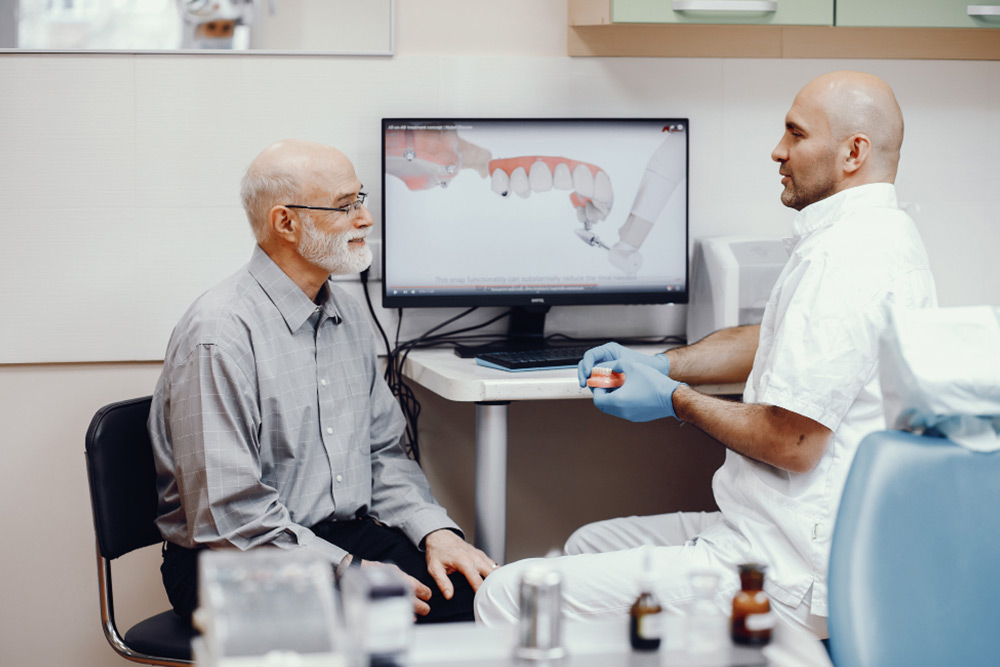
A lost tooth can have a lot more effects than just your smile. It can impact how you talk, chew, and even how healthy your jawbone stays over time. Fortunately, contemporary dentistry has reliable ways to replace teeth, with Dental Implants and Dental Bridges being the most prevalent.
But which one is better for your teeth in the long run?
This article makes it easy to understand the difference between implants and bridges. There’s no jargon and no pressure.
Getting to Know the Two Choices
What Are Dental Implants?
Dental implants are fake tooth roots that are put into the jawbone. They are usually made of titanium. A crown is placed on top of the implant once it has fused with the bone so that it looks and works like a natural tooth.
Dental implants take the place of:
- The root
- The teeth that can be seen
- What a natural tooth does
That’s why people typically think of them as the best fake teeth.
What are Dental bridges?
A dental bridge fills in the space created by a missing tooth by using the teeth next to it as support. The teeth next to each other are reshaped, and a fake tooth (pontic) is “bridged” between them.
For many years, people have utilized dental bridges, and they are still a good choice in some situations.
Key Differences Between Implants and Bridges
1. Effect on the health of the jawbone
This is where dental implants really shine.
- Implants make the jawbone stronger, which stops bone loss.
- Bridges don't replace the root, thus the bone can keep losing below.
Bone loss can change the shape of your face and the way your teeth fit together over time.
Winner: Dental Implants
2. Effect on Teeth Next to It
- To make room for dental bridges, healthy teeth next to them must be ground down.
- Dental implants stand on their own and don't change the teeth next to them.
Keeping your natural teeth is always healthier for your long-term dental health.
Winner: Dental Implants
3. Lasting and durable
- With the right care, dental implants can last 15 to 25 years or more.
- Dental bridges usually survive between 7 and 10 years, however they may need to be replaced.
Both need proper oral hygiene, although implants last longer.
Winner: Dental Implants
4. Looks and Comfort
When done successfully, both alternatives can look real, although implants frequently feel more like real teeth.
- Implants don't move or go loose.
- Some patients may find bridges to be heavy.
Winner: Dental Implants by a Small Margin
5. How long the treatment takes
- Most of the time, it takes 2 to 3 visits to finish a dental bridge.
- Dental implants take longer because they need time to heal and integrate with the bone.
Bridges may look easier if speed is important.
Winner: Dental Bridges
Cost Comparison: Bridges vs. Implants
Cost is often a deciding issue.
Cost of Implants in India
The cost of dental implants in India depends on:
- Brand of implant
- Condition of the bones
- Material for the crown
- Expertise at the clinic
The first cost of implants in India may be expensive, but they are frequently cheaper in the long run because they survive longer and don’t need to be replaced as often.
How much does a dental bridge cost?
In general, the expense of a dental bridge is lower up front. However, bridges may need to be replaced every few years, which can add to the total cost of ownership.
In the short term, bridges are cheaper.
In the long run, implants may cost less overall.
Which choice is better for you?
Usually, dental implants are better if:
- You want a solution that lasts a long time.
- Your jawbone is healthy.
- You want to keep the teeth next to it safe.
- You want the function that feels most natural.
Dental bridges might be a good choice if:
- You need to get treatment faster.
- The teeth close to it already need crowns.
- Implants won't work well with this bone.
- A lot of people are worried about money.
Before giving you the best care, a dentist will look at your bones, bite, and overall dental health.
What is the most important item for the long-term health of your mouth?
Don’t only think about how much it will cost or how long it will take when you wish to obtain a new tooth. Think about:
- Keeping bones safe
- Teeth that stay still
- Needs for upkeep
- Years of comfort
Dental implants are the best solution for many people to acquire the correct balance of function, durability, and long-term oral health.
Conclusion
It’s not about which one is “better” for everyone; it’s about which one is best for you. Dental bridges are still helpful, but dental implants are usually better for your long-term oral health, keeping your bones strong, and feeling natural.
A good dental consultation will help you choose the best option for the long term, not only for now.
It’s not just how a smile looks.
It’s about how long it lasts.